Xavier Researchers Explore Strategies to Expand Black Participation in Clinical Trials
Researchers at Xavier University of Louisiana are studying how healthcare professionals and researchers can better connect with Black communities for clinical trials. Their findings may help improve recruitment, communication, and provider education.
The research, published in the International Journal of Clinical Trials, involved Xavier faculty from public health, pharmacy, and biomedical sciences. They worked together to learn how Black Americans see clinical research and what affects their decisions to take part.
The study, “Increasing Black Americans’ participation in clinical trials: a qualitative analysis,” was authored by Billie Castle, Ph.D., of Xavier’s Department of Public Health; Petera Diaban of SMALA Consulting Group, LLC; LaKeisha Williams, Pharm.D., MSPH; Patricia Davis; and William Kirchain, Pharm.D., CDCES, of Xavier’s College of Pharmacy; and Soon Ja Elzey of Xavier’s Department of Biomedical Sciences. It was published July 28, 2026, in Volume 13, Issue 3 of the journal.
Clinical trials help show if medical treatments are safe and effective. But if the people in these studies do not reflect those most affected by a disease, researchers may not know how treatments work for everyone. The Xavier team highlights the need for more Black Americans to be included, especially in studies about health issues that strongly affect Black communities.
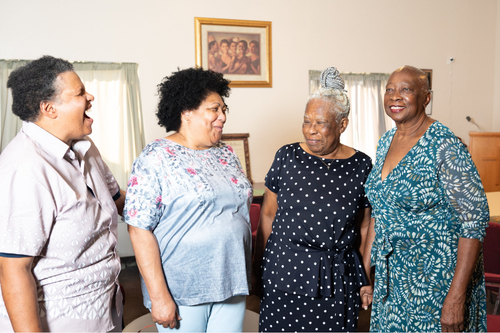
Instead of just looking at enrollment numbers, the researchers talked directly with community members. They studied discussions from four focus groups held in summer 2024. Most people in these groups were over 40 and came from different backgrounds. These conversations helped the researchers learn what people know about clinical trials, what might keep them from joining, and what could encourage them to take part.
The discussions showed that deciding to join a clinical trial is about more than just knowing they exist. People talked about worries over past abuses in medical research, possible risks, and practical problems that make it hard to join. Still, some said they might take part to help their communities, get paid, or if the process is easy and convenient.
The conversations also showed how important it is for researchers and healthcare workers to connect well with people who might join studies. Community members asked for clear, helpful information and suggested using different ways to reach people, including working with trusted local partners. The study aims to be useful beyond just its published results.
This work is part of Xavier’s larger effort to address health disparities through research, education, and working with the community. By listening to community members and including their concerns, Xavier researchers are helping to shape new ways to build trust and improve communication in medical research.
Read the full study in the International Journal of Clinical Trials