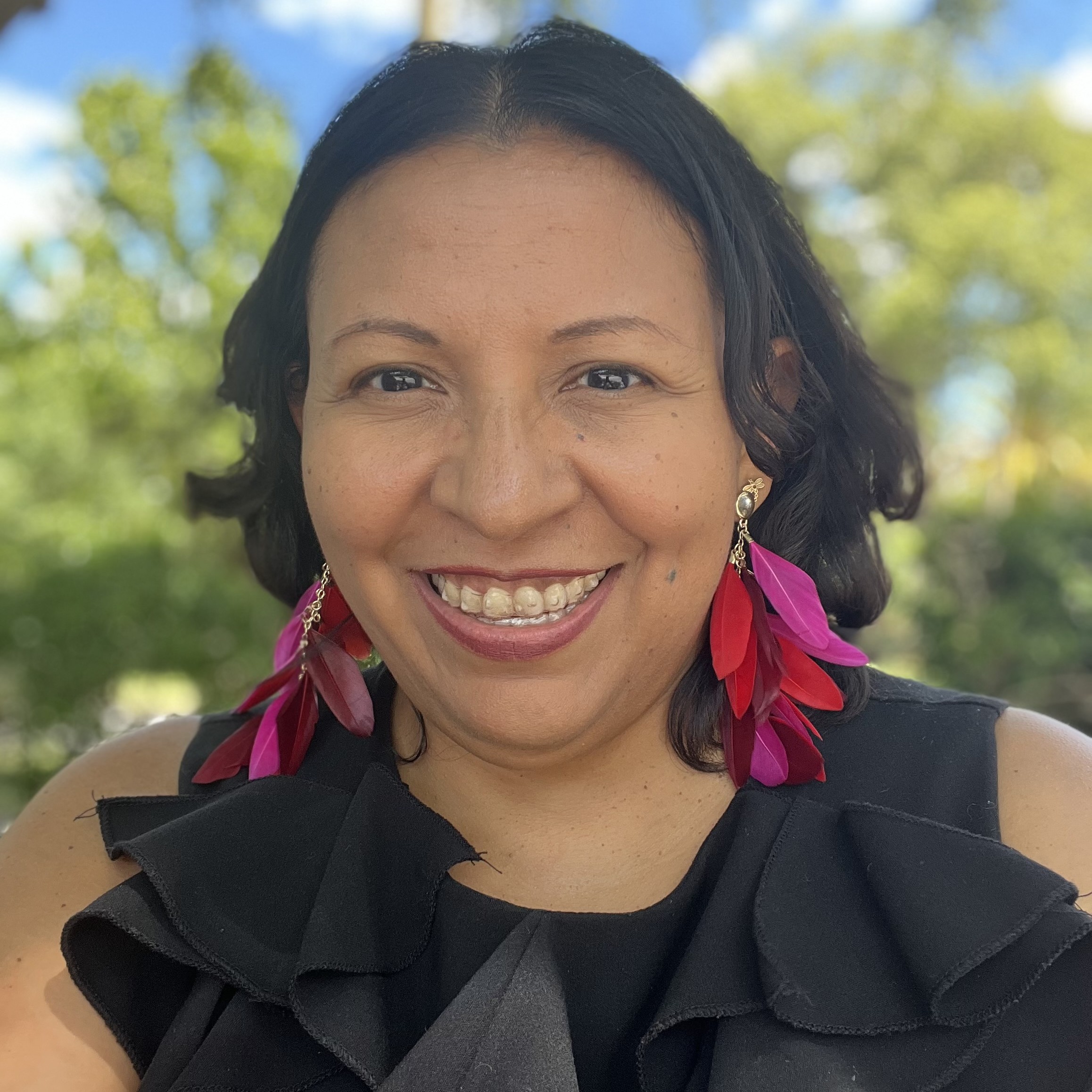
Dr. Ben Khallouq (she, her, hers, ella), known to students and colleagues as Bee, is a transdisciplinary medical sociologist whose research examines how social structures, institutions, and systems of power shape health, identity, and inequality. Grounded in intersectional perspectives, her scholarship examines Medicine as both a healthcare institution and a powerful system of knowledge, authority, and social practice. Her work advances a vision of justice-based Medicine by informing health policy and strengthening medical education, healthcare delivery, and clinical practice.
Working at the intersection of L-G-B-T-Q+ health, medical education, and health policy, Bee’s research examines how institutional practices and social identities interact to shape medical education and professional practice, healthcare access and utilization, health outcomes, and patient experiences, particularly among historically marginalized communities. Through this work, she seeks to understand and help transform the systems that shape people’s health and experiences within healthcare. She also collaborates with healthcare systems and providers to move beyond documenting inequality toward identifying meaningful pathways for institutional and social change.
Teaching and mentorship are inseparable from her scholarship. Bee approaches the classroom as a shared intellectual space in which students and instructors learn with and from one another. She encourages students to connect sociological theory to the world around them, question taken-for-granted assumptions, and recognize knowledge production as a tool not only for understanding the world but also for transforming it. At the center of her teaching is the belief that meaningful learning emerges through curiosity, community, a commitment to change, and active engagement with the social world.
Beyond research and teaching, Bee enjoys reading, biking, traveling, photography, and spending time in nature. These interests reflect the same curiosity that draws her to medical sociology: an interest in people, health, communities, and the many ways we understand and make meaning of the social world around us.